
Buying off-plan in Albania: what it means and why most buyers end up doing it
Off-plan means paying for an apartment before the building is finished, sometimes before it is started, on the strength of plans, a price list and a developer’s promise. In Albania this is not a niche: on 1 October 2026, 79% of the apartments for sale on BalkanHome were developer stock, and of the 754 listings that appeared over the previous quarter, 90% were on the Bay of Durrës, where Golem alone grew from 940 to 1,304 active listings. If your budget is under €100,000 and you want to be near the sea, the apartment you can afford is very likely one that is still being built.
The attraction is real. New supply was priced below the existing stock (a median of €1,510/m² against €1,596/m² for listings already on the market), developers accept payment in instalments over the build, which matters because Albanian banks rarely lend to non-residents, and you choose the floor and the view before the best units go.
The risk is also real, and it has a specific shape: you hand money to a company for something that does not exist, in a market with no escrow system. What protects you is not the developer’s reputation but the sequence of legal steps below, and a contract that ties every payment to something you can verify.
- Share of listings that are developer stock (1 Oct 2026)
- 79%
- New listings in Q3 2026 on the Bay of Durrës
- 90% of 754
- Median price of new listings vs existing stock
- €1,510/m² vs €1,596/m²
- Escrow system for off-plan payments
- None
- Legal protection of a registered pre-sale contract
- Law 111/2018, Article 50
A registered pre-sale contract marks your apartment as taken at the Cadastre. A reservation form and a bank transfer do not.
How an off-plan purchase works in Albania, step by step
The purchase runs in two legal stages. First a pre-sale contract (in Albanian a kontratë sipërmarrjeje, kontratë porosie or premtim shitjeje) binds the developer to deliver a specific unit and you to pay for it in stages. Then, once the building has its use certificate, a final sale contract transfers ownership and the apartment is registered in your name. Everything in between is construction and payments.
- 1. Reservation
- Often a short form and a small sum to hold the unit. It is not a registered contract and gives no legal protection.
- 2. Pre-sale contract before a notary
- Identifies the unit on the permit floor plans, fixes price, schedule, completion date, finish.
- 3. Registration at the Cadastre (ASHK)
- The contract is entered in the building-permit register; the unit is marked as taken.
- 4. Construction and staged payments
- Instalments against stages you or your lawyer can verify on site.
- 5. Use certificate
- The planning authority confirms the building matches the permit (Law 107/2014, Article 42).
- 6. Final sale contract and registration
- Notarised deed, ASHK registers you as owner, certificate downloadable via e-Albania.
The reservation agreement is where buyers lose their footing
Most problems start at step one. A reservation agreement is drafted by the developer, often lets the developer change the terms, limits refunds and gives a vague completion date. It is not notarised and not registered, so nothing stops the same unit being promised to someone else. Treat it as a short hold at most, pay as little as possible under it, and move to a notarised pre-sale contract quickly.
The law that protects an off-plan buyer: Article 50 of the cadastre law
Albania does not have escrow for off-plan sales, but it has something many buyers never hear about. Article 50 of Law 111/2018 "On the cadastre" requires every pre-sale contract between a developer and a buyer of a unit under construction to be registered, first in the building-permit register and then in the register of the building shell. Registration marks the unit as taken: it cannot be promised to anyone else.
The same article does four more things for you. The contract must identify the exact unit according to the floor plans attached to the building permit, otherwise the Cadastre refuses to register it. A developer may mortgage only units that have not yet been sold under a registered contract, and may not promise units at all if the land was mortgaged earlier, without the creditor’s written consent. If the developer’s creditors enforce against the half-built building, enforcement reaches only the units that have not been promised to buyers, unless the debt was secured by a mortgage older than your contract. And after registration the Cadastre issues a registration certificate to the parties, which proves that your unit is recorded under the terms of your contract.
All of this applies only to a notarised contract that has actually been registered. A reservation form, a private agreement or a bank transfer "on account" gives none of it. So the single most useful question to a developer is not "how many projects have you finished" but "will you register my contract at ASHK and give me the registration certificate".
- Unit marked as taken, cannot be sold twice
- Article 50, point 1
- Unit must match the permit floor plans or registration is refused
- Article 50, point 2
- No new mortgage over units already promised to buyers
- Article 50, point 4
- Creditors cannot enforce against promised units (unless an older mortgage)
- Article 50, point 5
- Registration certificate issued to the buyer
- Article 50, point 6
What to check before you pay a developer in Albania
Every item below can be checked by an independent lawyer in a few days. Do it before the pre-sale contract, not after.
- Land: the plot is registered at ASHK in the developer’s name, or the developer holds a registered contract with the landowner. Ask for the current cadastral extract (kartela), not a copy from last year.
- Mortgages: whether the land or the project already carries a mortgage. If it does, a unit can only be promised to you with the creditor’s written consent, and that consent belongs in your file.
- Building permit: the permit number, the issuing authority (the municipality, or the National Territorial Council for large projects), and the floor plans attached to it. Your unit must be identifiable on those plans; if the developer has changed the layout since, the permit must be updated before your contract can be registered.
- The developer: company registration, who the shareholders are, and which projects it has actually handed over with use certificates and registered owners, not just started.
- The contract: notarised, in Albanian, with a certified translation if you do not read Albanian; the notary will require a certified interpreter at signing.
- Registration: confirmation that the contract will be registered at ASHK and that you will receive the registration certificate from the permit register.
- Energy certificate: the law requires an energy performance certificate to be handed to the buyer of a new building; ask whether the project will have one.
Payment schedule for an off-plan apartment: how to stage it without escrow
Albanian law does not set deposit sizes or payment stages for off-plan sales, and there is no escrow account holding your money until delivery. Whatever you pay goes to the developer and finances the build. Published guides quote deposits anywhere from 10% to 30% of the price; in practice the schedule is whatever you and the developer sign. That makes the schedule the main place where you can protect yourself.
The principle is simple: each payment follows a stage of construction that you or your lawyer can see and verify, and a meaningful part of the price stays with you until the building has its use certificate and the final deed is signed. The schedule below is a negotiating target, not a market norm; many developers will open with front-loaded terms, and the gap between the two is where your lawyer earns the fee.
- At the notarised pre-sale contract
- Deposit; as low as you can agree
- Foundations and structure complete
- Next instalment, after a site visit
- Building closed (roof, external walls, windows)
- Next instalment
- Use certificate issued
- Large instalment
- Final sale contract and ASHK registration in your name
- Balance
Rules that hold regardless of the schedule
- Pay by bank transfer to the developer company’s account, never in cash and never to a private person.
- Pay nothing beyond a small reservation sum before the contract is notarised and registered.
- Make each instalment conditional on a stage, not on a calendar date, so a delay does not trigger a payment.
- Keep the last tranche until you hold the use certificate and the final deed, because that is the moment you stop being a creditor and become an owner.
- Fix the price in the contract. Developers release new phases at a set price list; in Q3 2026 the Golem median stayed at €1,350/m² while supply grew by 39%, so there is little reason to accept a clause that lets the price move.
What the pre-sale contract must say
The contract is drafted by the developer’s side and reviewed by yours. Beyond the price and the schedule, these are the clauses that decide what happens when something slips.
- The unit: building, floor, unit number and area exactly as on the permit floor plans, with the plan attached. This is what the Cadastre registers.
- Completion date with a penalty for delay (a daily or monthly amount, or a right to withdraw with a full refund after a set number of months).
- Specification: finish level, materials, fittings, whether the kitchen, air conditioning or furniture are included, and the common areas and parking.
- Area tolerance: what happens if the delivered unit is smaller or larger than contracted, with the price adjusted per square metre both ways.
- Changes to the plans: the developer may not change your unit without your written consent, and if the permit plans change, the developer updates the permit so the contract stays registrable.
- Your withdrawal: which part of the deposit is refundable, and when, if you pull out without the developer’s fault.
- Handover: a joint inspection with a defects list, a deadline to fix defects, and a warranty period after handover.
- Registration: the developer’s obligation to obtain the use certificate, sign the final deed and register you at ASHK within a set time after completion, and who pays which fees.
Is off-plan cheaper in Albania, and what can you negotiate
Off-plan stock is cheaper on average, but mostly because of where it is and how small it is, not because developers discount for risk. In Q3 2026 new listings came to market at a median of €1,510/m² against €1,596/m² for existing stock; resale apartments asked €1,649/m², 6% more than developer stock, largely because resale sits in central Tirana and Vlorë. Studios and 1+1 flats, which dominate coastal developments, carry the lowest price per square metre (€1,397 and €1,510/m²).
Do not expect the listed price to fall. Between July and October 2026, 98.8% of the apartments listed on both dates kept their price; on the Kavajë coast 2.7% were cut, in Golem 1.1%. Developers hold the price list and release the next phase at the same level. What moves in a negotiation is everything around the price: the payment schedule, a parking space, the kitchen, the finish, a longer defects period, or a better unit at the same price.
Before you negotiate, compare the price per square metre with completed apartments in the same zone, not with the developer’s own earlier phases. The median for every zone is in how much an apartment in Albania costs; a declared sea view adds about 26% and the first 100 metres from the beach about 13.5% on the Bay of Durrës.
- New listings, Q3 2026
- €1,510/m²
- Existing stock, Q3 2026
- €1,596/m²
- Resale apartments
- €1,649/m² (+6% over developer stock)
- Listings that kept their price over the quarter
- 98.8%
- Golem supply, 1 July to 1 October 2026
- 940 to 1,304 listings, median unchanged at €1,350/m²
After completion: use certificate, final deed, registration and taxes
A finished building is not yet a legal apartment. Under Law 107/2014 the planning authority issues a use certificate at the end of the development when inspections confirm that the works match the permit, and ASHK registers a new building on the basis of that certificate together with the construction documentation. Only then can the developer sign the final sale deed before a notary and have you registered as owner. Your ownership certificate and cadastral card are issued electronically and can be downloaded through e-Albania.
The one-off costs at this stage are the same as for any purchase: about 4 to 7% of the price for the notary, Cadastre registration, legal fees and the municipal transfer charge, detailed in the cost of buying property in Albania. The sale of a new apartment to a private buyer is exempt from VAT in Albania: the tax administration allows developers to opt to charge VAT on buildings, but not on residential units sold to individuals, so there is no 20% VAT line to add to the price. From then on the annual property tax is 0.05% of value and rental income is taxed at 15%, as set out in property taxes in Albania.
One detail worth knowing: the property tax rules also tax unfinished construction sites that have passed their permit deadline, at 30% of the normal rate. A project that is years past its permit date is paying for standing still, which is one more reason to ask how old the permit is.
What goes wrong with off-plan purchases in Albania
The cases that end badly share a pattern: money paid early, nothing registered, and no clause to fall back on. Each risk below has a defence earlier in this guide.
- Delay: the most common problem. Without a penalty clause a late building costs you years of rent or use and gives you nothing to claim.
- Developer insolvency: if your contract is registered, Article 50 keeps your unit out of reach of the developer’s creditors unless an older mortgage exists; if it is not registered, you are an unsecured creditor with a receipt.
- A different apartment: smaller area, changed layout, a window where a balcony was. Without an area clause and a change clause you have no price adjustment, and if the delivered unit no longer matches the permit plans the Cadastre can refuse to register the sale.
- No use certificate: the building is finished and lived in, but never passed inspection, so apartments cannot be registered in buyers’ names. Keep the last tranche until the certificate exists.
- Structural quality: Durrës and its coast were hit by the November 2019 earthquake, and in May 2026 the national inspectorate confirmed subsidence of 18 and 28 centimetres in two newly built blocks of a large marina project in Durrës and ordered reinforcement. Ask for the geotechnical study and the structural design, and for the builder’s declaration of conformity that the law requires.
- The same unit promised twice: possible with reservation forms, impossible once your contract is registered, because the unit is marked as taken.
- Paying in cash or to a person: no trace, no proof, no claim. Bank transfer to the company only.
Off-plan checklist before you sign
- Independent lawyer, paid by you, has seen the kartela, the permit with floor plans and the company file.
- The unit is identified on the permit plans in the contract, and the plans are attached.
- The contract is notarised and will be registered at ASHK; you will receive the registration certificate.
- No mortgage over the land or project, or the creditor’s written consent is in your file.
- Payments follow construction stages; the last tranche waits for the use certificate and the final deed.
- Completion date, delay penalty, area tolerance, change clause, defects and warranty are all written down.
- Price per m² compared with completed stock in the same zone, not with the developer’s price list.
- All payments by bank transfer to the developer company.
Key takeaways
- Off-plan is the default on the Albanian coast: 79% of listings are developer stock and 90% of new supply in Q3 2026 was on the Bay of Durrës.
- There is no escrow. Your protection is a notarised pre-sale contract registered at ASHK under Article 50 of Law 111/2018, which marks the unit as taken and keeps it away from the developer’s creditors.
- Pay by stages you can verify, by bank transfer to the company, and keep the last tranche until the use certificate and the final deed.
- Write the completion date, delay penalty, area tolerance and a no-changes clause into the contract; a unit that no longer matches the permit plans cannot be registered.
- Do not negotiate the price list (98.8% of listings kept their price in Q3 2026); negotiate the schedule, the finish and the extras.
Frequently asked questions
Is it safe to buy an off-plan apartment in Albania?
Is there escrow for off-plan purchases in Albania?
How much deposit do you pay for an off-plan apartment in Albania?
Can a developer in Albania sell my apartment to someone else?
What happens if the developer goes bankrupt in Albania?
Is there VAT on new apartments in Albania?
When do I become the owner of an off-plan apartment in Albania?
Find a new-build apartment in Albania
Browse apartments for sale on the coast and in Tirana, compare the price per m² with completed stock, and contact the seller directly. Free for buyers.
Browse listingsFor the media
Charts and figures on this page may be used free of charge, crediting BalkanHome.eu as the source with an active link to this page.

Downloads
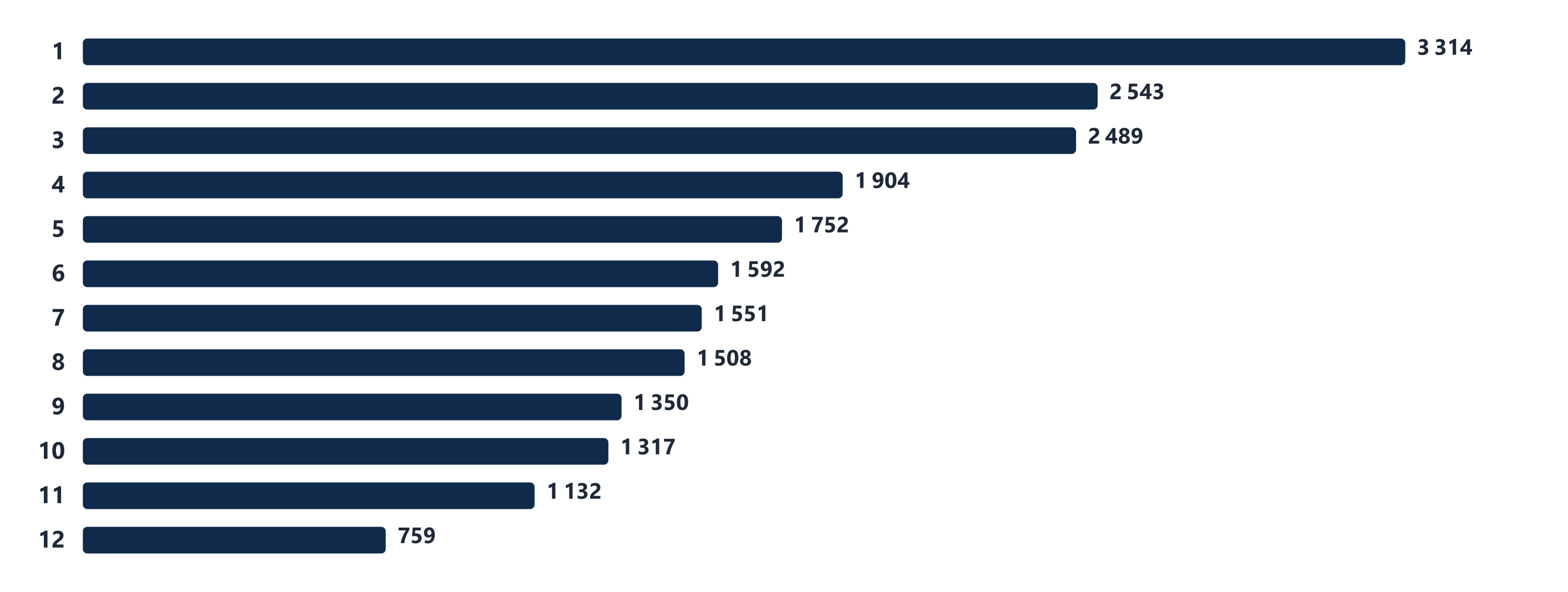
- Median asking price per square metre of apartments for sale, by location, EURPNG, publication version, numbers only
- Market data (CSV)all cities and the monthly series, UTF-8, English column names
Full reports
- Apartment prices in Albania, Q3 2026: prices flat, supply up 9%
- Property prices in Albania, September 2026
Additional data cuts are prepared on request for editorial teams.
Author and media contact: Mateusz Sawicki, founder of BalkanHome.eu · contact@balkanhome.eu
This guide is general information, not legal or tax advice. Verify current rules with a qualified Albanian attorney or notary before you buy.